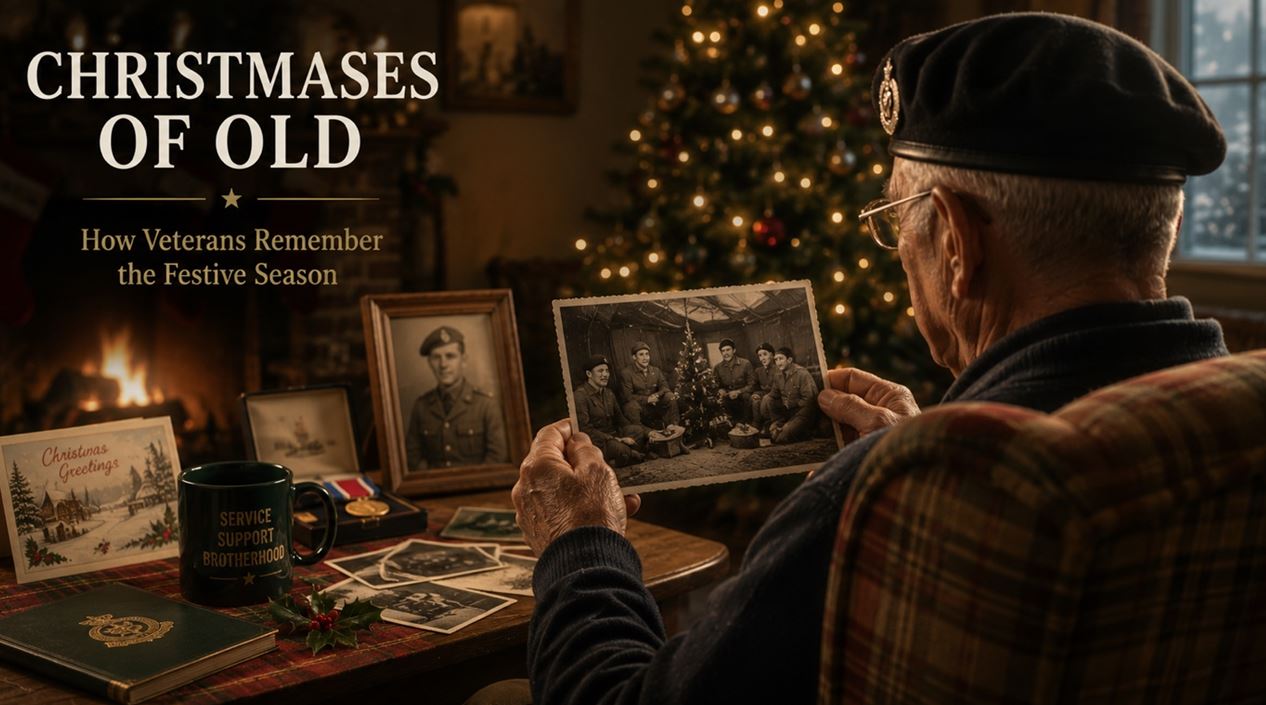
For many veterans, Christmas carries a second set of memories alongside whatever the civilian version of the season currently looks like. A version of the festive period shaped by duty, location and the particular company of people you happened to be with, and that tends to stay vivid decades after it happened in ways that ordinary working Christmases rarely do.
These memories often resurface at this time of year with a quality that is difficult to describe to people who have not had the same experience. They can bring genuine warmth and laughter. They can carry a quieter, more complicated feeling too: the awareness of how much distance lies between the person who was there and the one navigating Christmas now.
Christmas in conditions nothing like Christmas
Some veterans spent the festive period in countries where nothing about the environment matched the season. The date existed on the calendar but the geography told a completely different story. No frost, no cold, no anything that corresponded to what was happening at home. Making something of the day in those conditions required a collective effort that was, in retrospect, rather remarkable.
Makeshift decorations appeared from nowhere. Someone produced tinsel that had no business being where it was found. The cookhouse tried harder than usual, sometimes to memorable and occasionally to questionable effect. The deliberately absurd decision to mark the occasion despite everything conspired to create moments that people remember clearly forty years later. The ridiculousness of the whole thing was part of what made it stick.
There is also the version where someone in the unit had received a parcel from home that contained something specifically chosen. Not a generic gift voucher but something that demonstrated that the person at home had thought carefully about what would actually be useful or welcome in that specific situation. The significance of that kind of attention, when you were a long way from home, was entirely disproportionate to the object itself.
When duty did not pause for the date
Others spent Christmas in more climatically familiar settings but in circumstances that had nothing civilian about them. On exercise in conditions that made the season feel entirely irrelevant. Standing guard when families at home were opening presents. Maintaining operational readiness because the task did not pause for the calendar, and neither did the people responsible for it.
Many veterans describe a particular quality to those Christmas days on duty. The quiet satisfaction of getting the job done while knowing that most of the world was not. The specific camaraderie of being in that situation with people who understood exactly what it meant to be there. The phone call that was too short and shared among too many people but that somehow carried everything that needed to be said. The deliberate normalisation of an abnormal situation that military culture is genuinely good at.
The small things that carried disproportionate weight
When Christmas was spent away from home, small objects and gestures took on a significance that would have been impossible to predict in advance. A letter that arrived on exactly the right day after weeks in transit. A parcel that contained something specifically chosen by someone who understood what was actually needed rather than what was conventionally festive.
The colleague who produced something absurd to wear on their head and kept it on all day without self-consciousness. The mess meal that required some imagination to describe as a Christmas dinner but that everyone ate with genuine appreciation. The moment when the usual professional register was suspended just far enough to acknowledge that this was, in fact, Christmas, and that it mattered to everyone in the room even though no one was going to make a thing of saying so.
The bond that shared Christmases create
There is something particular about spending Christmas with military colleagues in operational or training settings. The shared acknowledgement that everyone would choose to be somewhere else, that everyone is managing the same quiet feelings about it with the same outward equanimity, that the day is going to be marked somehow regardless of the circumstances: this creates a kind of solidarity that ordinary working life rarely produces.
Veterans often describe the people they spent those Christmases with as among the most significant relationships of their lives. Not necessarily their closest friends in any conventional sense, but people they were bound to by something more specific than friendship: the shared experience of being away from home together and making the best of it with a particular kind of purposeful good humour that service at its best tends to produce.
Carrying those memories forward
These recollections can bring genuine warmth and they can bring something more complicated. Missing people who are no longer around. Noticing the distance between the person who was in that place and the one navigating the present Christmas. Wondering whether the people you were closest to during those postings are managing all right, and whether it would be strange to get in touch after a long silence.
If the festive season brings difficult feelings alongside the positive ones, that is a normal response to a life that involved experiences most of the people around you did not share. It does not require dramatic action. It may simply require naming rather than pressing down.
Veterans’ Gateway (0808 802 1212) can connect you with peer support from people who understand exactly this kind of experience. Combat Stress runs a 24-hour helpline at 0800 138 1619. Both are there for the quieter difficulties as well as the acute ones. Heroes Hub’s free resources on mental health after service cover the full range of what is available.
📚 Free guides and resources: heroeshub.uk.com
📞 Hearing loss claims – Justice4Heroes: 0800 776 5622
🌐 heroeshub.uk.com