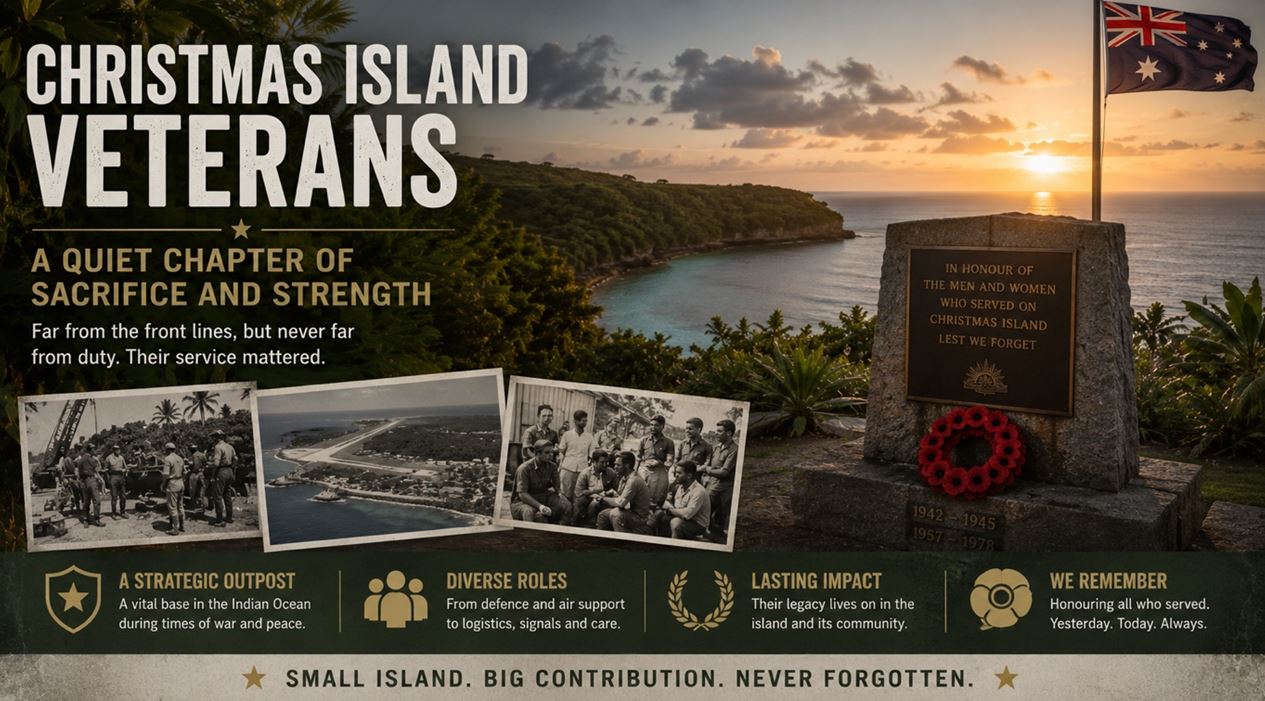
Some chapters of military history are familiar. Others are carried quietly by the people who lived them, shared in small circles and understood most clearly by those who were present. The British nuclear test veterans, including the thousands who served on Christmas Island, now known as Kiritimati, during Operation Grapple in 1957 and 1958, represent one of those quieter chapters. Their service was real, their duty was carried out with professionalism and discipline, and the questions their experience raised have accompanied many of them through decades of subsequent life.
What happened on Christmas Island
Between 1952 and 1958, the United Kingdom carried out a series of atmospheric nuclear weapons tests in Australia and the Pacific as part of its post-war defence programme. Christmas Island (Kiritimati) became the centre of Operation Grapple, Britain’s hydrogen bomb testing programme, during 1957 and 1958.
Service personnel stationed on Christmas Island performed a wide range of functions, including logistics, engineering, observation, technical support and many other duties associated with preparing for and carrying out the testing programme. Most were young. Most had limited detailed understanding of the potential risks involved. All were serving their country in what was regarded as a matter of national security during the height of the Cold War.
Veterans who were present during the detonations describe the experience in terms that convey both its extraordinary nature and their matter-of-fact acceptance of what they were asked to do. Many recall watching explosions from distances that would be considered unthinkable under today’s health and safety standards. Some veterans later recalled seeing what appeared to be the bones in their hands and arms through their closed eyelids because of the extraordinary brightness of the flash. Many were wearing standard military clothing with little or no specialised protective equipment. They turned their backs to the blast, covered their eyes with their hands, and then carried on with their duties. That was what was asked of them, and that was what they did.
The journey that followed
For many Christmas Island veterans, the experience did not conclude when their deployment ended. In the years and decades that followed, some developed serious health conditions. Others reported health difficulties affecting their children and grandchildren, leading to longstanding concerns about possible intergenerational effects. The scientific evidence surrounding radiation exposure from the British nuclear tests remains complex and, in some areas, contested. However, for many veterans and their families, the lived experience has been one of uncertainty, unanswered questions and a belief that recognition has been slow to come.
What has remained constant throughout that journey is the character of the veterans themselves. They have pursued recognition with the same quiet discipline and determination that defined their military service. For many years, the British Nuclear Test Veterans Association played a central role in campaigning for recognition and supporting veterans and their families. Its work helped ensure that the experiences of nuclear test veterans remained in the public eye and contributed significantly to the ongoing conversation about their service and its lasting impact.
Why this story matters now
The Christmas Island veterans are not simply part of Britain’s history. Many are still alive today, now in their eighties and nineties. Their families continue to live with the questions raised by the testing programme. More broadly, their story reminds us that veterans who served in exceptional and potentially hazardous circumstances deserve to be heard, respected and supported.
Recognising the experiences of the Christmas Island veterans is not about assigning blame or reopening old arguments. It is about ensuring that an important chapter of British military history is not forgotten because it is difficult, and about recognising that our responsibility to those who served does not diminish with the passage of time.
Support and recognition available
The British Nuclear Test Veterans Association website remains an important source of historical information about Britain’s nuclear test programme and the experiences of those who served. It can be found at bntva.com.
Veterans UK (0808 1914 218) can advise former service personnel about the War Pension Scheme and other support that may be available to veterans whose health has been affected by military service. SSAFA also provides welfare casework and practical support for veterans and their families who are navigating complex or historic service-related issues.
Heroes Hub’s free resources cover a wide range of veteran entitlements, health support and welfare information. If you or someone you know served on Christmas Island or in another nuclear testing role and have questions about your health, welfare or available support, the information available through Heroes Hub can help point you in the right direction. Veterans’ Gateway (0808 802 1212) can also connect veterans with specialist organisations and services.
Free guides: heroeshub.uk.com
Hearing loss claims – Justice4Heroes: 0800 776 5622
🌐 heroeshub.uk.com